
Most people miss the first clues of macular degeneration. The disease starts in the center of your sight, but the signs are tiny and easy to ignore. In this guide you’ll learn the macular degeneration early warning signs, why they matter, and what steps you can take right now to catch the problem before it steals your central vision.
We’ll walk through what the condition actually is, the subtle changes you should watch for, the biggest risk factors, how doctors confirm the diagnosis, and lifestyle tweaks that can slow the decline. By the end you’ll know exactly when to call an eye professional.
What Is Macular Degeneration?
Macular degeneration is a disease that hurts the macula , the tiny spot in the back of your eye that lets you see straight ahead. When the macula breaks down, reading, recognizing faces, and driving become hard.
Special Health Report
Digital Eye Strain: New research reveals the specific nutrient that shields your retina from permanent blue light damage.
Protect My Vision Now →There are three stages. Early stage shows up as tiny yellow deposits called drusen under the retina. You might not notice any change in vision at this point.
Intermediate stage means the drusen get larger and you may start to see a slight blur in the center of what you look at. Progression slows for many people, but some will move on to the late stage.
Late stage splits into two forms. Dry (also called atrophic or geographic atrophy) slowly eats away retinal cells. Wet (neovascular) creates fragile blood vessels that leak fluid and blood, causing a rapid loss of central vision.
The disease can affect one eye or both, and each eye can be in a different stage. That’s why regular eye checks matter.
“The best time to start watching for changes was yesterday.”
Understanding the stages helps you see why early signs matter. When you know what to look for, you can act before the damage becomes permanent.
Special Health Report
Deep-Sea Discovery: Researchers uncover a simple 30-second "Ocular Detox" ritual that flushes away vision-stealing plaque naturally.
Read The Full Report →Bottom line: Knowing the three stages lets you recognize when a harmless‑looking change could be the first hint of macular degeneration.
Early Warning Signs to Watch For
The first clues are subtle distortions in your central view. Most people think the disease blurs distant objects, but the real early signals live right in the middle of what you see.
Here are the three signs that appear across the most trusted eye‑health sources:
- Loss of fine detail straight ahead , you might miss a clock hand or a word in the middle of a sentence.
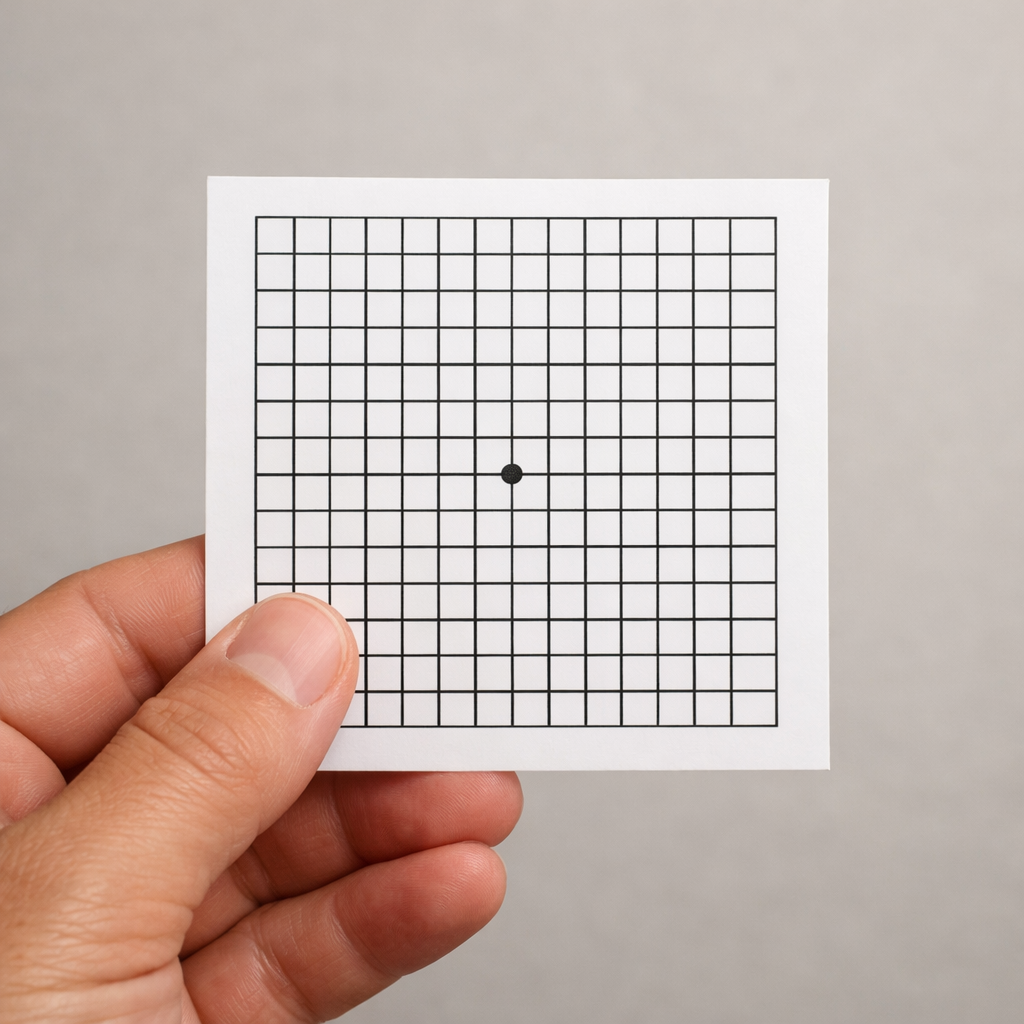
- Metamorphopsia , straight lines look wavy or bent, especially on an Amsler grid.
- Sudden dark spots in the center of your vision.
Why these matter: they all point to the macula itself, not the peripheral retina. If you notice any of them, schedule an eye exam right away.
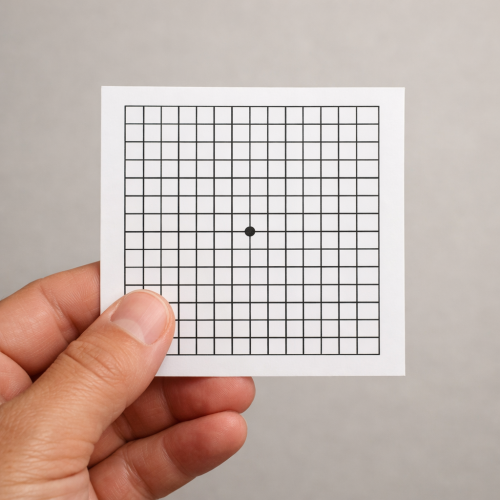
One easy way to test yourself at home is with an Amsler grid. Hold the grid about 14 inches away, cover one eye, and look at the central dot. If any lines look wavy, missing, or darker, you’ve caught an early sign.
According to the UK National Health Service, these symptoms can also signal other eye problems, so a professional exam is the safest way to know what’s going on.
Bottom line: Spotting any of these three changes means you should see an eye doctor right away.
Key Risk Factors and When to See a Doctor
Knowing your risk helps you decide how often to get screened. Age is the biggest factor , the condition is the leading cause of vision loss in people over 60 in the U.S.
Other important risk factors include:
- Family history of macular degeneration.
- Smoking , it roughly doubles your chance.
- High blood pressure and cholesterol.
- Long‑term exposure to bright light or blue‑light from screens.
- Poor diet low in lutein, zeaxanthin, and omega‑3s.
UC Davis Health notes that about 1 in 10 Americans over age 50 are affected, and regular eye exams can catch the disease early.
If you have any of the risk factors, aim for a complete eye exam at least once a year. If you notice any early warning sign, book an appointment immediately, even if your last exam was recent.
When you meet with your eye doctor, they will look at both the front and back of the eye. They’ll check for drusen, pigment changes, and any fluid under the retina.
Here’s a quick checklist you can use before the visit:
- Do you have trouble reading small print?
- Do straight lines look wavy on a grid?
- Have you seen a dark spot in the center of your view?
- Do you smoke or have a family history of AMD?
Bring this list with you. It helps the clinician focus on the right tests.
For a deeper dive on which supplements might help, on vision health supplements.
Bottom line: Age and lifestyle drive risk, so regular exams and quick action on symptoms keep vision safe.
How Macular Degeneration Is Diagnosed
Diagnosing macular degeneration starts with a thorough eye exam. The doctor will use several tools to see inside the retina.
The first step is a visual acuity test , you read letters on a chart to see how sharp your vision is. Next comes a dilated retinal exam where drops widen the pupil so the doctor can look at the back of the eye.
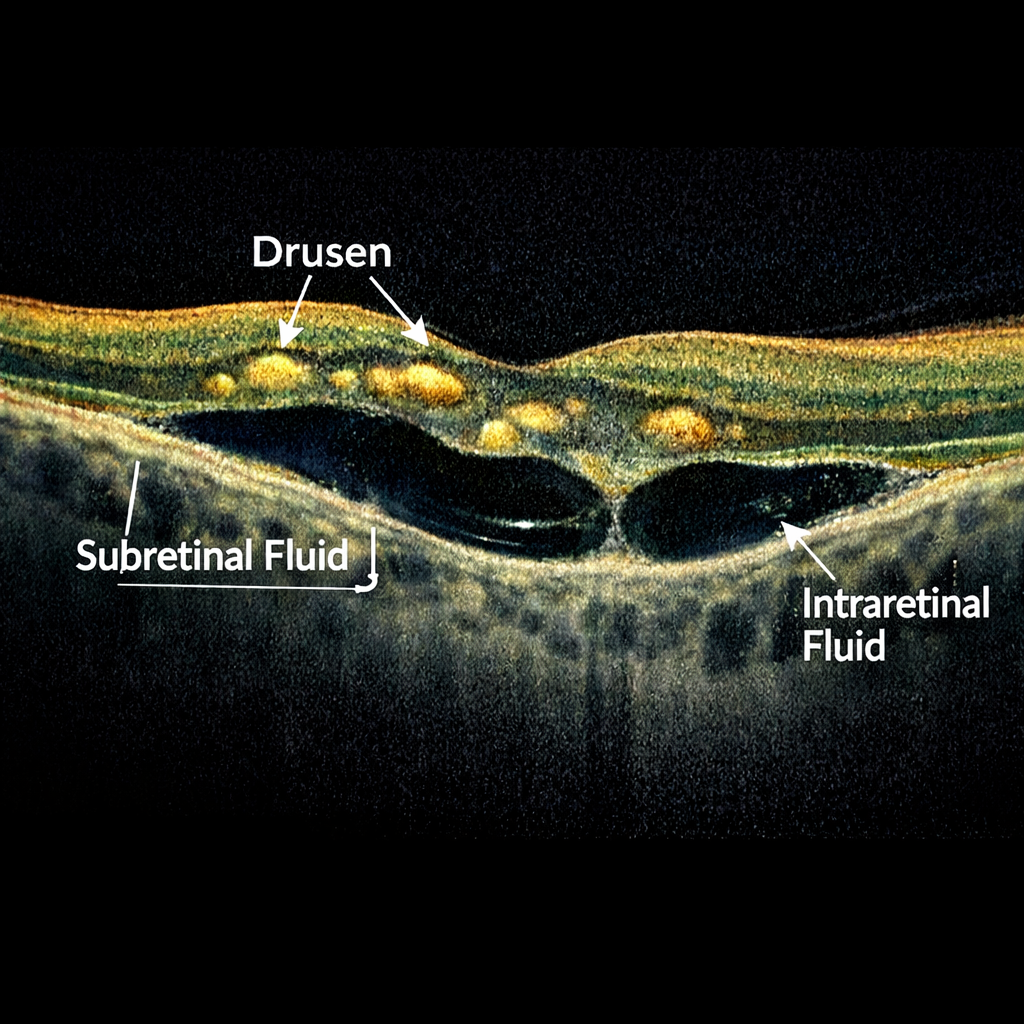
One of the most powerful tools is Optical Coherence Tomography (OCT). OCT takes cross‑sectional images of the retina, letting the doctor see drusen, fluid, and any new blood vessels.
On an OCT scan, drusen appear as tiny bumps under the retinal pigment layer. Fluid shows up as dark pockets, and new vessels appear as bright, tangled lines.
Another test is fluorescein angiography. A dye is injected into a vein, and the doctor takes photos as the dye travels through the retinal vessels. Leaking vessels light up, confirming wet AMD.
Sometimes doctors use an Amsler grid at the office to compare your home test with the clinical view.
Bottom line: Modern imaging gives a clear picture of macular health, so you can get the right treatment fast.
Lifestyle Changes to Lower Your Risk
While you can’t stop aging, you can tweak habits to slow macular degeneration. The evidence points to nutrition, exercise, and light management.
Eat plenty of leafy greens like kale and spinach. They’re rich in lutein and zeaxanthin, pigments that protect the macula from blue‑light damage. The American Academy of Ophthalmology recommends at least 6‑7 servings of green vegetables per week.
Fish such as salmon and sardines give you omega‑3 fatty acids, which support retinal cell membranes.
Quit smoking. Even a few cigarettes a day raise your risk dramatically.
Stay active. Regular aerobic exercise improves blood flow to the eyes and can lower blood pressure.
Limit screen time or follow the 20‑20‑20 rule: every 20 minutes, look at something 20 feet away for at least 20 seconds. This reduces eye strain and may lower cumulative blue‑light exposure.
Consider an AREDS‑type supplement if you have moderate dry AMD. The formula includes vitamin C, vitamin E, zinc, copper, lutein, and zeaxanthin.
For a quick list of the top eye‑healthy nutrients, check out lutein and zeaxanthin benefits. It breaks down why those pigments matter and how to get them from food.
Finally, protect your eyes from UV and bright sunlight with sunglasses that block 99‑100% of UV rays.
Bottom line: Nutrition, no smoking, exercise, and smart screen habits together lower the chance that early signs become permanent loss.
Conclusion
Spotting macular degeneration early is all about paying attention to tiny changes in the center of your sight. The three early warning signs , loss of fine detail, wavy lines, and dark spots , are easy to test at home with an Amsler grid. Risk factors like age, family history, smoking, and diet tell you how often you should get checked.
Modern eye exams use OCT and angiography to catch the disease before it robs you of vision. And you don’t have to wait for a problem to appear – following a plan to improve your vision health in 2026 can slow the process.
If any of the macular degeneration early warning signs show up for you, call an eye doctor right away. Early action gives you the best shot at keeping your central vision sharp for years to come.
At Natural Daily Insights , Clarity Edition we blend clinical‑backed research with natural solutions, so you get the most reliable guidance for protecting your eyes.
Frequently Asked Questions
What age should I start getting screened for macular degeneration early warning signs?
Most experts suggest a baseline eye exam at age 40, then yearly checks after 50, especially if you have risk factors. If you notice any of the early warning signs before then, book an appointment right away.
Can a dry form of macular degeneration become wet?
Yes. About 10‑15% of people with dry AMD develop the wet form, which progresses faster. Regular monitoring helps catch that shift early.
How reliable is the Amsler grid for spotting early changes?
The Amsler grid is a simple, low‑cost tool that catches metamorphopsia , wavy or missing lines , which is a hallmark of early macular degeneration. It’s not a substitute for a professional exam, but it’s a good first check.
Are there any supplements proven to slow macular degeneration?
Clinical trials (AREDS and AREDS2) showed that a mix of vitamin C, vitamin E, zinc, copper, lutein, and zeaxanthin can slow progression in moderate dry AMD. Talk to your doctor before starting any supplement.
Does smoking really increase my risk?
Smoking roughly doubles the chance of developing macular degeneration. Quitting can cut that risk back and also improve overall eye health.
What should I ask my eye doctor during a check‑up?
Ask about drusen size, any fluid under the retina, and whether OCT images show early changes. Also request a review of your Amsler grid results and discuss lifestyle steps you can take.
Is there any way to reverse damage from early macular degeneration?
Current treatments aim to slow further loss rather than reverse existing damage. However, early detection combined with nutrition and lifestyle changes can preserve the vision you still have.
How often should I use the Amsler grid at home?
Weekly testing is a good routine. Mark any change on a calendar so you can report it accurately to your eye doctor.