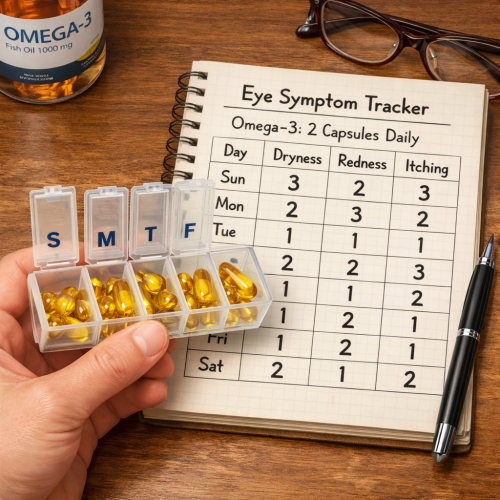

Dry eyes feel gritty, red, and just plain uncomfortable. Most people try eye drops, but the real fix often starts inside the body. Top Supplements for Vision Health (2026 Review) shows that omega‑3 EPA DHA can calm inflammation and boost tear quality. In this guide you’ll see how to pick the right supplement, find the sweet spot for dosage, slip it into your day, pair it with proven eye‑care tricks, and track your progress. Let’s get clear eyes, fast.
Step 1: Choose the Right EPA/DHA Supplement
When you shop for fish oil, you’ll see a sea of bottles promising better vision. Not all are equal. The first thing to check is how much EPA and DHA each serving really gives you. A study on EPA/DHA levels in fish oil supplements found that total EPA + DHA ranged from 300 mg to 3,000 mg per capsule (PubMed 23642375). That spread is huge, and it matters because the eye’s oily layer needs a steady supply of these fats.
Next, look at the form. Softgel capsules usually hold more omega‑3 than hard‑gel caps. Nordic Naturals uses a natural triglyceride form, while OmegaVital 820 re‑esterifies the oil to boost bioavailability. If a product lists phospholipid or krill oil, you’re getting EPA/DHA wrapped in a membrane that the body loves to absorb.
Special Health Report
Digital Eye Strain: New research reveals the specific nutrient that shields your retina from permanent blue light damage.
Protect My Vision Now →Finally, scan the label for extra eye‑supporting ingredients. Only a few products add lutein, flaxseed oil, or antioxidant blends. Those extras can help protect the retina while the omega‑3 calms surface inflammation.
| Product | EPA (mg) | DHA (mg) | Form | Bio‑availability claim | Eye‑supporting ingredients |
|---|---|---|---|---|---|
| Nordic Naturals | 853 | 427 | Softgel | Natural triglyceride | — |
| OmegaVital 820 | 1,600 | 800 | Softgel | Re‑esterified TG | — |
| Brudypio® 1.5 g | — | — | Capsule | Triglyceride | Vitamins, minerals, antioxidants |
| Refresh Optive Mega‑3 | — | — | Softgel | — | Flaxseed oil |
Pick a product that gives you at least 500 mg of EPA plus DHA combined per serving, uses a triglyceride or re‑esterified form, and ideally adds a antioxidant or lutein. Anything less will likely leave you waiting for relief.
And remember, the label’s “total fish oil” number can be misleading. A 1,000 mg fish‑oil capsule might only contain 300 mg EPA + DHA. Focus on the EPA/DHA values, not the total oil.
Bottom line:The right supplement delivers enough EPA + DHA, uses a high‑bioavailability form, and may include eye‑supporting nutrients.
Step 2: Determine the Optimal Dosage
Finding the perfect dose feels like trial and error, but the research gives us a roadmap. Most positive studies used 1,000 mg to 3,000 mg of combined EPA + DHA daily, with noticeable improvements after eight to twelve weeks (Ubie Health). However, the NIH’s big 3,000 mg trial showed no extra benefit over placebo, reminding us that more isn’t always better.
Special Health Report
Scientific Breakthrough: The 2026 Ocular Protocol that restores macular density and sharpens distance vision in weeks.
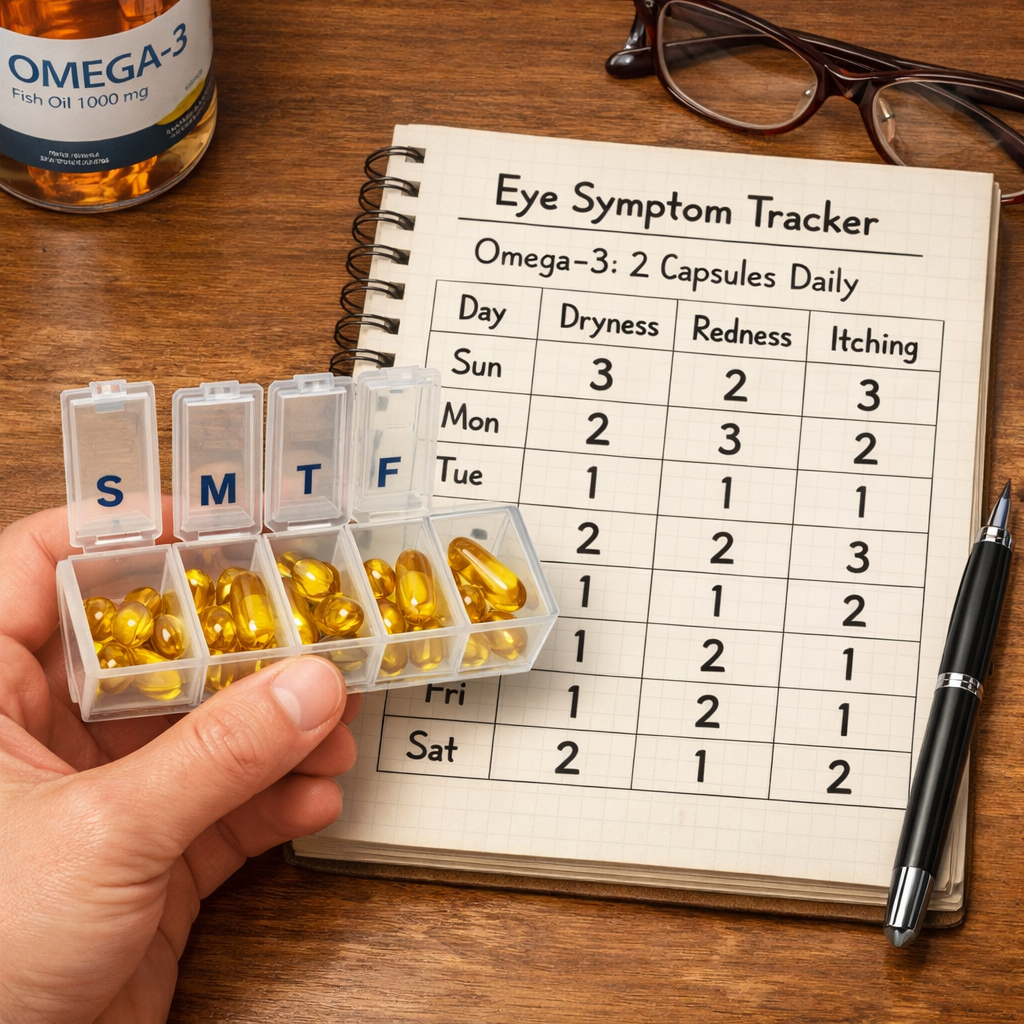
See The Full Protocol →Start low. If you’re new to omega‑3, aim for 500 mg EPA + DHA split into two doses. That eases any mild stomach upset and lets your body adjust. After two weeks, increase to 1,000 mg per day if you feel fine. Track symptoms with a simple diary: note eye sting, redness, and tear film feel each night.
For most adults, 1,000 mg to 2,000 mg total EPA + DHA per day hits the sweet spot. If you have blood‑thinner medication or upcoming surgery, stay under 2,000 mg and talk to a doctor.
And don’t forget the EPA‑to‑DHA ratio. Research points to a 2:1 EPA‑to‑DHA mix as most effective for dry‑eye inflammation. Look for a label that lists roughly twice as much EPA as DHA.
When you reach your target dose, keep it steady for at least eight weeks before judging results. If symptoms improve, stay the course. If not, consider switching form or adding complementary therapies.
Bottom line:Begin with 500 mg, work up to 1,000‑2,000 mg of EPA + DHA daily, and give it eight weeks to see real change.
Step 3: Incorporate Omega-3s into Your Daily Routine
Supplements work best when they fit naturally into what you already do. The easiest way is to tie them to a habit you never skip , brushing your teeth or making coffee.
Here’s a simple plan: take one capsule with breakfast, another with dinner. If you use a morning smoothie, drop the softgel in the blender; the fat in the smoothie helps absorption.
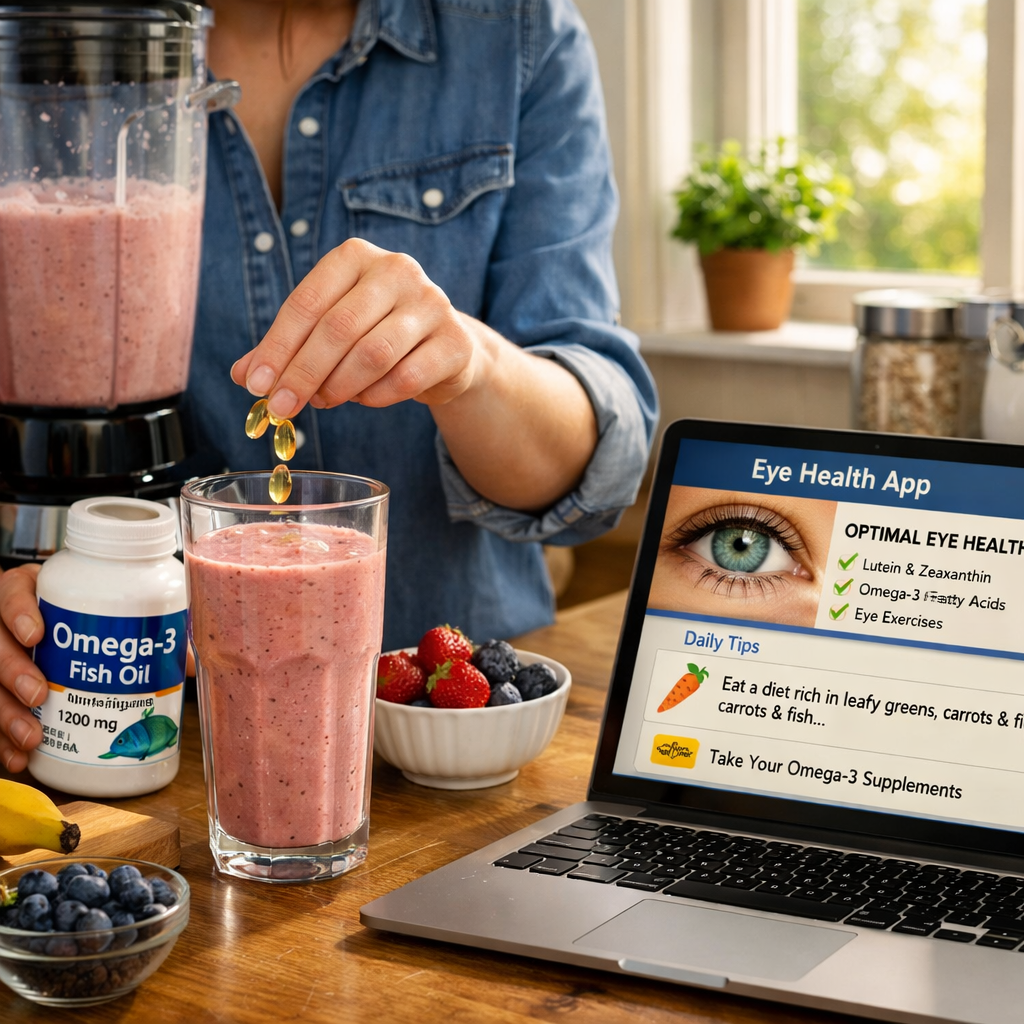
And if you’re a busy professional, set a phone reminder at 8 am and 7 pm. The reminder acts like a cue, so you won’t forget amid meetings.
For those who dislike pills, liquid fish oil can be mixed into a spoonful of yogurt. Just check that the liquid form lists the same EPA/DHA amounts per serving as the capsule you’d otherwise take.
But don’t let the supplement become a stand‑alone hero. Pair it with screen‑time breaks, hydration, and a humidifier in dry rooms. Those small moves amplify the omega‑3 effect.
Bottom line:Tie omega‑3 intake to breakfast and dinner, use reminders, and combine with lifestyle tweaks for best results.
Step 4: Combine with Other Dry Eye Therapies
Omega‑3s are a solid piece of the puzzle, but they rarely cure dry eye on their own. Think of them as a teammate that works best when the whole roster is on the field.
Start with preservative‑free artificial tears. Use them four times a day for the first two weeks, then cut back as omega‑3s start easing discomfort. Warm compresses on the lids for five minutes twice daily help melt the oil that blocks the meibomian glands.
Next, adopt the 20‑20‑20 rule: every 20 minutes, look at something 20 feet away for 20 seconds. This reduces blink‑rate fatigue from screens, a common dry‑eye trigger. For extra screen-time protection, consider using affordable blue light blocking glasses, which can further minimize digital eye strain.
When you combine these steps with omega‑3s, studies show a clearer improvement than any single method. The Cochrane review noted that omega‑3 plus standard care (tears, warm compresses) lowered symptom scores more than standard care alone.
And if you take blood thinners, talk to your doctor before hitting high doses. Omega‑3s can affect clotting at larger amounts.
Finally, schedule regular eye exams. Your optometrist can check the health of your meibomian glands and adjust the treatment plan if needed.
Bottom line:Pair omega‑3 EPA DHA with artificial tears, warm compresses, screen breaks, and professional eye checks for a complete approach.
Step 5: Monitor Progress and Adjust
Tracking is the only way to know if you’re on the right path. Use a simple 0‑10 scale each night to rate dryness, burning, and visual fluctuation.
After four weeks, compare your scores to the baseline. If you see a drop of three points or more, you’re likely in the right zone. If not, consider these tweaks:
- Raise the dose by 250 mg, staying under 2,000 mg total if you’re on blood thinners.
- Switch to a re‑esterified triglyceride softgel for better absorption.
- Add a lutein‑zeaxanthin supplement for extra retinal support, and check out our guide on how to improve vision health in 2026 for more holistic strategies.
Keep an eye on side effects. Rancid fish oil can cause a fishy aftertaste or stomach upset. If that happens, change brands or try a capsule with enteric coating.
And don’t forget the seasonal factor. Winter air is drier, so you may need a higher dose or a humidifier during colder months.
Bottom line:Consistent monitoring lets you fine‑tune Omega-3 EPA DHA for dry eyes and keep relief on track.
Conclusion
Omega‑3 EPA DHA for dry eyes is a proven, low‑risk tool that fits right into a broader eye‑care plan. By picking a high‑quality softgel, dosing smartly, weaving the supplement into daily habits, and pairing it with artificial tears, warm compresses, and screen‑break rules, you give your eyes the best chance to stay moist and comfortable.
Remember, the science says more isn’t always better , a 3 g dose didn’t beat placebo in the NIH trial. Aim for the range that research supports, watch your symptoms, and adjust as needed. At Natural Daily Insights , Clarity Edition, we’ve curated this step‑by‑step roadmap so you can move from itchy, blurry days to clear, comfortable vision.
If you’re ready to start, grab a trusted supplement, set a reminder, and log your progress. Your eyes will thank you.
Frequently Asked Questions
Can I get enough Omega-3 EPA DHA from food alone?
Getting 1,000 mg of EPA + DHA from food means eating five servings of salmon each week, which is tough for most people. A small study noted that the average adult only eats about 90 mg per day. That shortfall is why a supplement is often the most practical route for Omega-3 EPA DHA for dry eyes. Pair occasional fish meals with a daily capsule for steady levels.
What form of omega‑3 is best for absorption?
Research shows that triglyceride and re‑esterified triglyceride (rTG) forms absorb better than ethyl‑ester fish oil. Softgel capsules in natural TG or rTG form, like those from Nordic Naturals or OmegaVital 820, deliver more EPA + DHA to the bloodstream. If you have a sensitive stomach, look for an enteric‑coated softgel to reduce fishy aftertaste.
How long does it take to feel relief?
Most clinical protocols report noticeable improvement after eight to twelve weeks of consistent dosing. Keep a daily symptom log; if you see a steady drop in the 0‑10 discomfort rating after six weeks, you’re on the right track. Patience matters , the eye’s tear film rebuilds slowly.
Are there any risks with high‑dose omega‑3?
High doses (over 3,000 mg) can affect blood clotting, especially if you take anticoagulants. The NIH trial used 3 g and found no extra benefit, suggesting you don’t need that much. Stick to 1,000‑2,000 mg unless a doctor advises otherwise, and watch for stomach upset or a fishy aftertaste.
Should I take omega‑3 with meals?
Yes. Omega‑3 is fat‑soluble, so a meal that contains some healthy fat improves absorption. A breakfast of eggs and avocado or a dinner with olive oil‑dressed salad works well. Taking the capsule with water alone can still work, but you’ll get a better uptake with food.
Can I combine algae‑based omega‑3 with fish oil?
Algae‑derived supplements give you EPA + DHA without the risk of mercury. If you’re vegan or have fish allergies, algae oil is a solid alternative. Mixing both isn’t necessary; choose one source that meets your daily EPA + DHA target and stick with it for consistency.